
-(3).png?sfvrsn=7a75dd22_0 "Copy of Decarb Webinar Series Social (1200 x 400 px) (3)")
Thank you for joining us for Session One of our webinar series!
We’re excited to continue supporting your journey toward smarter energy strategies, improved operational efficiency, and meaningful decarbonization. Below you'll find resources that enable your learning about natural refrigerant heat pumps —including the downloadable resources, and next steps.
If this session sparked ideas or questions, we're here to help.
Post‑Webinar
Q&A Roundup
Questions from the session An Introduction to Natural Refrigerant Heat Pumps and our consolidated responses. These reflect guidance from our technical team and focus on clear, practical explanations.
Read the full Q&AFeatured Podcast
The Hidden Hero of Decarbonization — Industrial Heat Pumps
Explore how industrial heat pumps are rapidly becoming one of the most powerful tools in decarbonization. In this episode of AEE’s Full of Energy podcast, experts break down real-world applications, challenges, and the surprising efficiency gains possible when heat pump technology is properly optimized.
This aligns closely with CIMCO’s commitment to natural refrigerants, electrification, and sustainable thermal solutions for the future.
Download Resources
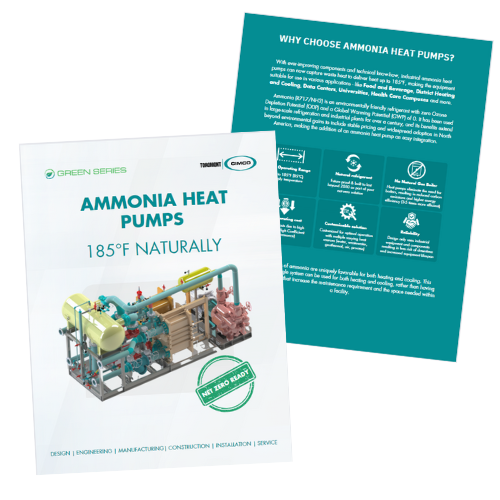
Industrial Heat Pumps
With ever-improving components and technical know-how, industrial ammonia heat pumps can now capture waste heat to deliver heat up to 185°F, making the equipment suitable for use in various applications - like Food and Beverage, District Heating and Cooling, Data Centers, Universities, Health Care Campuses and more.
Ammonia (R717/NH3) is an environmentally friendly refrigerant with zero Ozone Depletion Potential (ODP) and a Global Warming Potential (GWP) of 0. It has been used in large-scale refrigeration and industrial plants for over a century, and its benefits extend beyond environmental gains to include stable pricing and widespread adoption in North America, making the addition of an ammonia heat pump an easy integration.
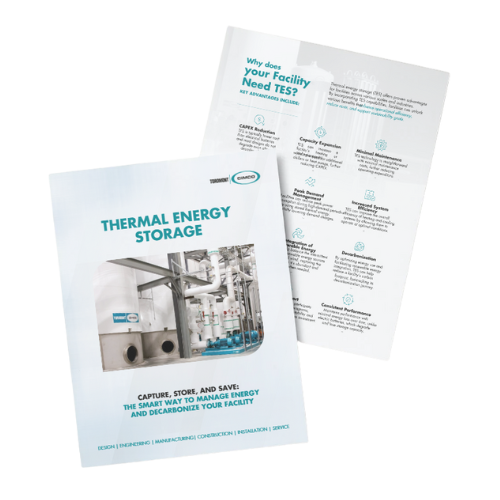
Thermal Energy Storage (TES)
Learn how TES can reduce peak demand, lower operating costs, and improve system reliability.
A TES system works like a rechargeable battery for heating or cooling, enabling the capture of excess thermal energy for later use. It can be added to a facility’s existing heating or cooling system to balance energy supply and demand. The thermal battery is charged during off-peak times, saving heating (or cooling) for later use. Then, when demand is high during peak times, the battery is discharged into the system, providing heating (or cooling) where needed.
Whether you’re running an industrial facility, or a large commercial building, TES is designed to offer seamless heating or cooling while lowering your carbon footprint.
UPCOMING SESSIONS
Deep Dive into Integrated Thermal Systems
What You’ll Learn
- The performance and cost limitations of traditional siloed systems
- What defines an integrated thermal system (ITS): heat pumps, TES, controls, energy transfer
- How integrated systems share and recover energy across loads
- Designing with a thermal energy network mindset
- Real‑world examples with Everllence
Takeaway
See the business case for integration and where energy‑sharing opportunities exist within your operations.
Beyond Heating & Cooling: Rethinking Thermal Opportunities
What You’ll Learn
- How advanced heat pump technology unlocks economic & environmental benefits
- Unconventional applications, including:
- Wastewater & freshwater treatment
- Carbon capture processes
- Air drying
- Desalination & process‑side heat recovery
Takeaway
Begin viewing facilities as holistic thermal networks—where cooling supports heating and vice‑versa.
Environmental Insight
Persistent Degradation Products of Low‑GWP Refrigerants
The German Environment Agency’s analysis shows that while certain modern low‑GWP refrigerants are marketed as climate‑friendly, they oxidize almost completely within 10–14 days into trifluoroacetic acid (TFA), a persistent, mobile, and environmentally concerning degradation product that is already appearing in precipitation at levels several times higher than 25 years ago, with projections indicating that continued use of these substances will significantly increase TFA burdens in surface and drinking water over time.
Blogs From Our Speakers
Payback, Performance, and Emissions: What the Industry Is Learning About Heat Pumps.

Decarbonization Trends Shaping Industries
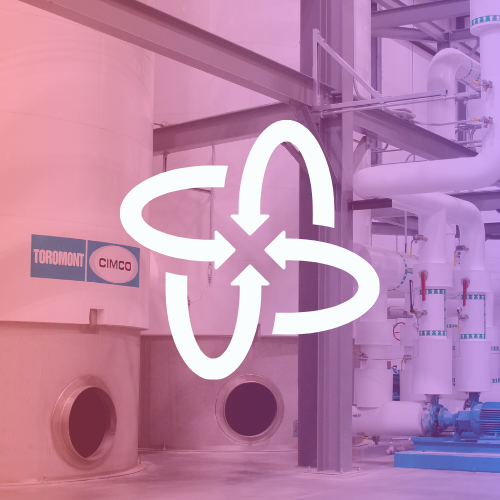
Thermal Hub: A Complete Solution for High-Temperature Water, Chilled Water, and Ice Storage

Hidden Benefits of Adding Thermal Energy Storage to District Energy Systems
Presented by CIMCO Refrigeration

For more information, please contact cpereira@toromont.com