
-(28).png?sfvrsn=d727dd22_1)
On‑Demand
Deep Dive into Integrated Thermal Systems
Learn how integrated thermal systems unlock higher efficiency, reduce operating costs, and eliminate waste caused by siloed heating and cooling design.
View Recap.png?sfvrsn=4900dd22_0 "RTE - Bashar (1)")
Thank you for joining us for Session Three—and the final installment—of our webinar series.
We appreciate you being part of this journey as we brought everything together to examine how Integrated Thermal Systems (ITS) support practical, scalable decarbonization.
In this final session, we focus on real‑world examples where heat pumps are driving economic and environmental value in areas like wastewater and freshwater treatment, carbon capture, air drying, desalination, and process‑side heat recovery. The key takeaway: your facility is more than a set of isolated systems—it’s a holistic thermal network. By understanding how cooling supports heating and vice versa, organizations can uncover interconnected opportunities that reduce energy use, lower emissions, and support long‑term decarbonization goals.
Below, you’ll find the downloadable resources from today’s session, along with final takeaways and pathways to help you move confidently from strategy to execution.
If this session sparked ideas or questions, we're here to help.
Post‑Webinar
Questions from the session Beyond Heating & Cooling: Rethinking Thermal Opportunities and our consolidated responses. These reflect guidance from our technical team and focus on clear, practical explanations.
Read the full Q&A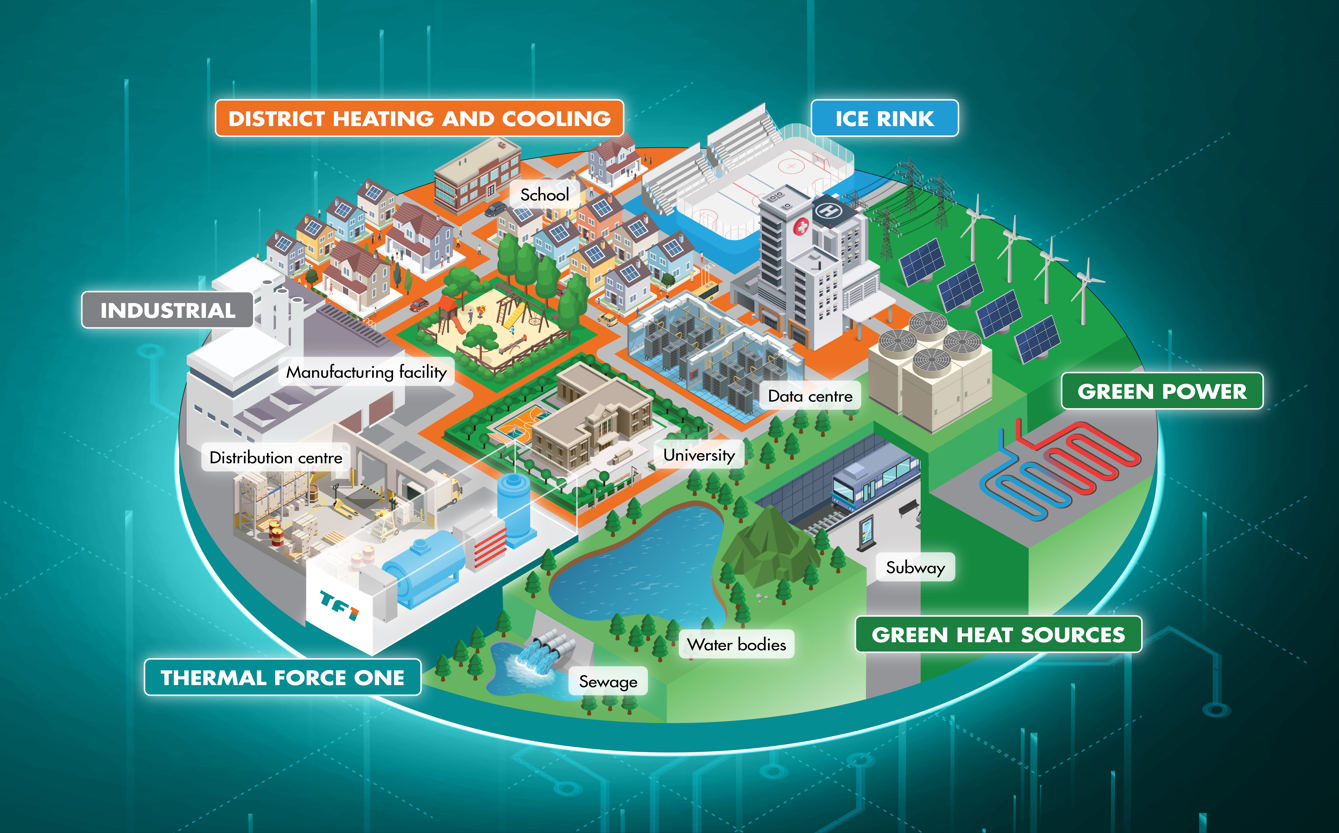
To accelerate the transition to clean green buildings, your buildings can become interconnected hubs of energy exchange.
By integrating your buildings, heat sources, and heat sinks, we help bridge the gap between your heating and cooling needs—creating a unified energy system where energy flows seamlessly from production to consumption. Central to this vision is the use of thermal energy already created from everyday operations and natural sources to power district energy systems and reduce environmental impact.
With ever‑improving components and technical know‑how, industrial ammonia heat pumps now capture waste heat and deliver temperatures up to 185°F, making them suitable for a wide range of applications including food & beverage, district heating and cooling, data centres, universities, health care campuses, and industrial facilities.
Ammonia (R717 / NH₃) is an environmentally friendly refrigerant with zero ozone depletion potential and zero global warming potential. Its long history in large‑scale industrial refrigeration makes it reliable, cost‑stable, and future‑ready.
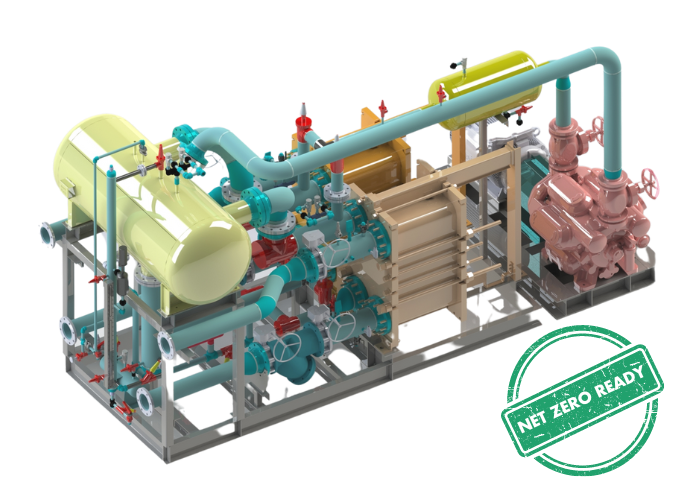
Real-world applications of industrial heat pump and energy-sharing solutions.
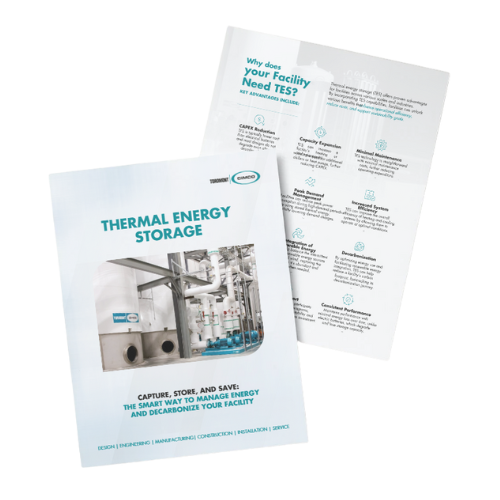
Learn how TES can reduce peak demand, lower operating costs, and improve system reliability.
A TES system works like a rechargeable battery for heating or cooling, enabling the capture of excess thermal energy for later use. It can be added to a facility’s existing heating or cooling system to balance energy supply and demand. The thermal battery is charged during off-peak times, saving heating (or cooling) for later use. Then, when demand is high during peak times, the battery is discharged into the system, providing heating (or cooling) where needed.
Whether you’re running an industrial facility, or a large commercial building, TES is designed to offer seamless heating or cooling while lowering your carbon footprint.
Learn how integrated thermal systems unlock higher efficiency, reduce operating costs, and eliminate waste caused by siloed heating and cooling design.
View Recap-(29).png?sfvrsn=d027dd22_1)
An introduction to natural refrigerant heat pumps and how ammonia and CO₂ technologies are reshaping decarbonization strategies.
View Recap
As part of its commitment to becoming carbon‑neutral, the Blatchford community partnered with CIMCO to deploy a high‑efficiency heat pump system that replaces conventional fossil‑fuel‑based heating.
.png?sfvrsn=26cbdc22_5)

Presented by CIMCO Refrigeration

For more information, please contact cpereira@toromont.com