
Food & Beverage · Energy Strategy
The Hidden Margin: Why Energy Is Becoming the Next Competitive Battleground in Canadian Food Production
For generations, success in food manufacturing came down to a familiar formula: secure raw materials, maximize production, control labour costs, and build strong customer relationships. Energy was important, but it was rarely considered strategic. It was simply another overhead expense, buried somewhere between maintenance and utilities on the income statement.
That reality is changing.
Today, energy is moving from the boiler room to the boardroom. Across Canada, energy performance is becoming a more important consideration for food processors because it can affect more than monthly utility bills. It can influence competitiveness, profitability, resilience, sustainability, capital planning, and the ability to succeed in a market where margins remain stubbornly tight.
For large-scale meat-processing facilities, energy is one of the major costs that can be influenced through operational and capital investment decisions. While processors cannot control commodity markets or dictate the price of chicken, pork, beef, or dairy, they have more control over how efficiently energy is generated, moved, recovered, and consumed within their facilities. Companies that examine this area may uncover a source of margin that has been sitting in plain sight for decades.
Energy Is Bigger Than Many People Realize
Food manufacturing is a significant industrial energy user in Canada. According to Natural Resources Canada's National Energy Use Database, based on the Industrial Consumption of Energy Survey conducted by Statistics Canada, Canadian food manufacturing consumed approximately 108.6 petajoules of energy in 2020. Natural gas accounted for 66.3% of that consumption, while electricity represented 30.9%.
Between 2000 and 2020, natural gas consumption in Canadian food manufacturing increased by 14.2%, while electricity consumption increased by 63.5%. These figures reflect the significant electrical and thermal demands associated with refrigeration, freezing, processing, sanitation, pumping, ventilation, and other facility operations.
A modern food-processing facility is not simply buying ingredients and labour. It is also converting significant amounts of electrical and thermal energy into finished products every day. In many large food-processing operations, energy can represent a significant controllable operating expense.
And controllable is the key word.
The Margin Squeeze Is Forcing a New Conversation
Food processors face relentless pressure. Commodity costs fluctuate unpredictably. Labour shortages continue across skilled trades and production roles. Regulatory requirements are increasing. Customers expect competitive pricing, reliable service, and stronger sustainability performance. The result is a constant search for incremental margin improvement.
For years, companies have focused on procurement, labour productivity, automation, and supply-chain optimization. Those opportunities still matter. In some organizations, however, many of the more immediate gains in these areas have already been pursued.
Energy is different.
Unlike many operating costs, energy use may include inefficiencies that have accumulated quietly over time. Depending on a facility's design, age, operating conditions, and control strategy, potential inefficiencies may include:
- Compressors operating harder than necessary
- Refrigeration heat being rejected outdoors while separate systems use natural gas or electricity to produce heat
- Systems operating at conditions established years ago and never revisited
- Control strategies evolving through operator adjustments rather than deliberate optimization
Each individual inefficiency may appear minor. Collectively, however, they can create meaningful avoidable costs, particularly in large facilities operating continuously. That is why energy is attracting the attention of executive leadership teams.
Not only because of sustainability. Because of economics.
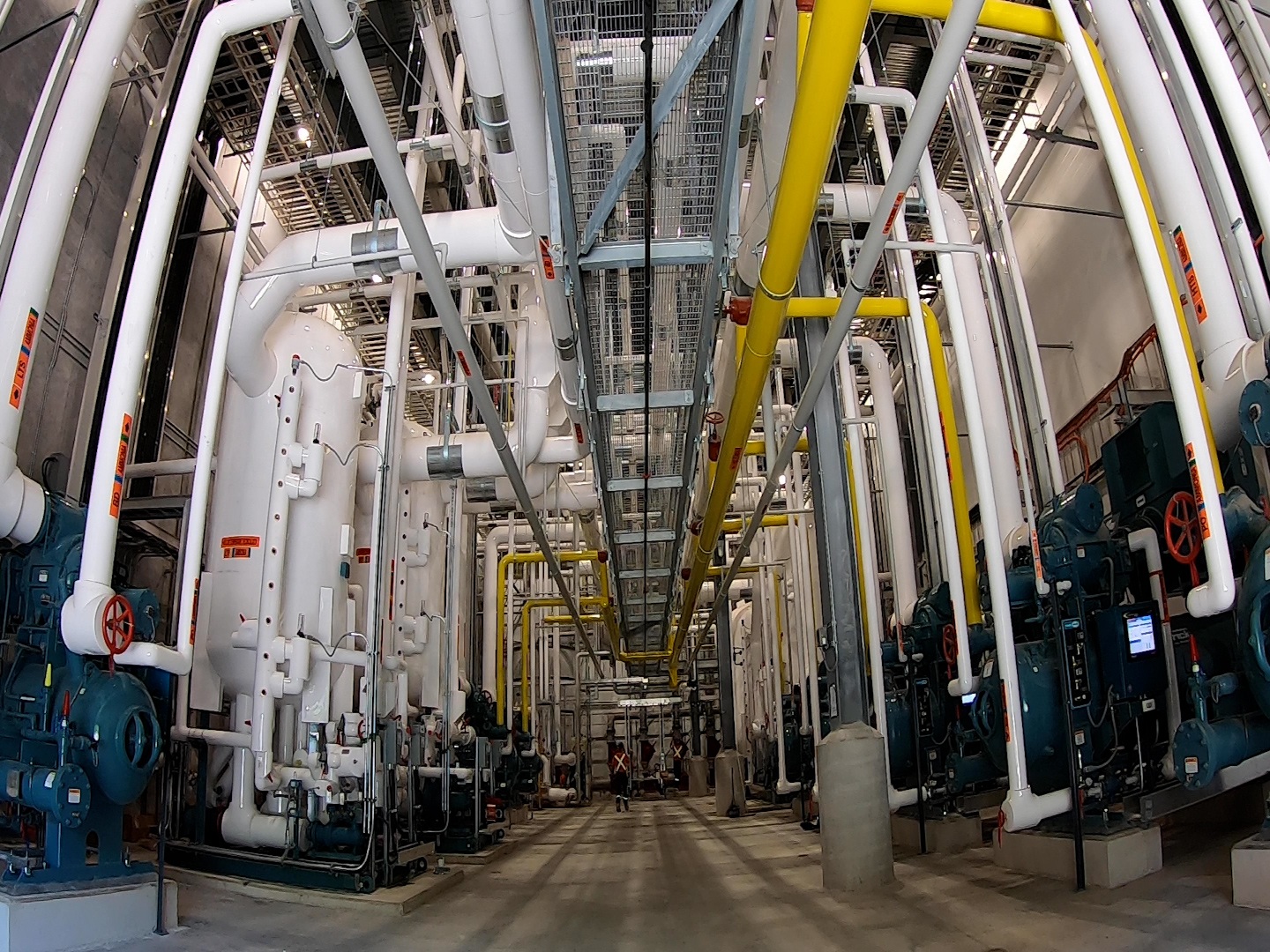
The Refrigeration System May Be the Most Strategic Asset in the Plant
Ask food processors what equipment is most critical to production, and the answer will frequently include refrigeration. Without reliable refrigeration:
- Meat cannot be safely processed
- Product quality may deteriorate
- Regulatory compliance can be compromised
- Inventory may be placed at risk
- Production can stop entirely
Yet many facilities still manage refrigeration primarily as a maintenance function. That approach may overlook refrigeration's broader operational and financial impact. Modern refrigeration systems can influence:
- Energy consumption
- Operating costs
- Production reliability
- Greenhouse gas emissions
- Heat-recovery potential
- Future capital requirements
Some food manufacturers are beginning to view refrigeration infrastructure in the same way they view production lines: as a strategic asset that can directly affect business performance.
The question is no longer simply whether a refrigeration system works. The question is whether it is delivering the most value possible under the facility's operating conditions.
The Most Expensive Heat May Be the Heat We Throw Away
One potentially significant and often underused opportunity in food manufacturing is heat recovery.
Refrigeration systems continuously remove heat from coolers, freezers, process areas, and products. In many systems, that heat is ultimately rejected outdoors through condensers or cooling towers. At the same time, a facility may use natural gas or electricity to provide heat for:
- Sanitation water
- Employee facilities
- Process requirements
- Space heating
- Washdown activities
In other words, a facility may be purchasing energy to produce heat while its refrigeration system is rejecting potentially recoverable thermal energy outdoors. Properly designed heat-recovery systems can capture a portion of the heat that would otherwise be rejected and use it for suitable applications elsewhere in the facility.
The opportunity is facility-specific. Its technical and financial performance depends on factors such as:
- Refrigeration load
- Temperature of the available heat
- Required end-use temperature
- Operating hours
- Simultaneous heating demand
- Existing boilers and heating equipment
- Controls and thermal storage
- Utility rates
- Seasonal operating conditions
Where these conditions align, heat recovery may reduce the natural gas or electricity required for water heating, space heating, washdown, or certain process loads. It may also reduce associated operating costs and greenhouse gas emissions where fossil-fuel or emissions-intensive energy consumption is displaced.
These applications are achievable using heat-recovery technology already used in industrial refrigeration systems today. However, potential energy savings, operating-cost reductions, and emissions reductions should be supported by a facility-specific engineering and financial assessment.
The Best Energy Projects Are No Longer Just Energy Projects
Some successful organizations have stopped viewing energy initiatives solely as utility projects. Instead, they evaluate them as business projects.
A heat-recovery project is not only about energy. It may be an opportunity to reduce operating costs.
A refrigeration optimization project is not only about electricity. It may be an opportunity to improve margins and system performance.
A controls upgrade is not only about sustainability. It may improve visibility, support better decision-making, and help operators respond more effectively to changing facility conditions.
This distinction matters because it changes who becomes involved in the discussion. Energy projects increasingly involve stakeholders beyond engineering and maintenance teams. They may also attract the attention of chief financial officers, operations leaders, sustainability officers, and executive teams.
The language of the conversation is shifting from kilowatt-hours to return on investment.
Energy Is Becoming a Competitive Advantage
The food industry has always searched for competitive advantages. Historically, those advantages came from:
- Scale
- Purchasing power
- Distribution
- Brand strength
- Manufacturing efficiency
Today, energy performance is joining that list. Depending on the project, facility conditions, operating practices, and energy sources involved, improved thermal and refrigeration performance may contribute to:
- Lower production-related energy costs
- More predictable energy use
- Lower greenhouse gas emissions where fossil-fuel or emissions-intensive energy consumption is reduced
- Reduced equipment strain under certain operating conditions
- Less exposure to future utility-price increases
Those benefits may compound over time when improvements are properly designed, operated, measured, and maintained.
For example, consider a hypothetical project that delivers and maintains $500,000 in verified annual savings. If those savings continued at the same level, the project would produce $5 million in gross savings over ten years, before accounting for project costs, maintenance, production changes, energy-price changes, financing, or the time value of money.
This is one reason some organizations are beginning to view energy performance as a strategic capability rather than only a maintenance metric.
The Winners Will Think Differently
The next generation of industry leaders will not ask whether energy matters. They will ask how to extract more value from it.
They will challenge assumptions about how refrigeration systems should operate. They will examine where recoverable heat may be available and economically useful. They will use data to understand thermal and refrigeration performance across individual facilities and entire operating networks. They will connect energy strategy with reliability, sustainability, and profitability.
Most importantly, they will recognize that every dollar spent on avoidable energy consumption is a dollar that cannot be invested elsewhere.
For years, food processors have searched for competitive advantages in procurement, labour, automation, and logistics. Some may be overlooking a meaningful opportunity inside their own mechanical rooms.
The hidden margin may not be in the marketplace. It may be in the energy already flowing through their facilities every day.

Connect with CIMCO today to learn more.