
Beyond the System · Episode 1
Inspect, Maintain, Replace:
Getting Ahead of Refrigeration Failures
Most refrigeration emergencies begin long before the breakdown, but a few routine checks can often catch the problem while it is cheaper to fix.
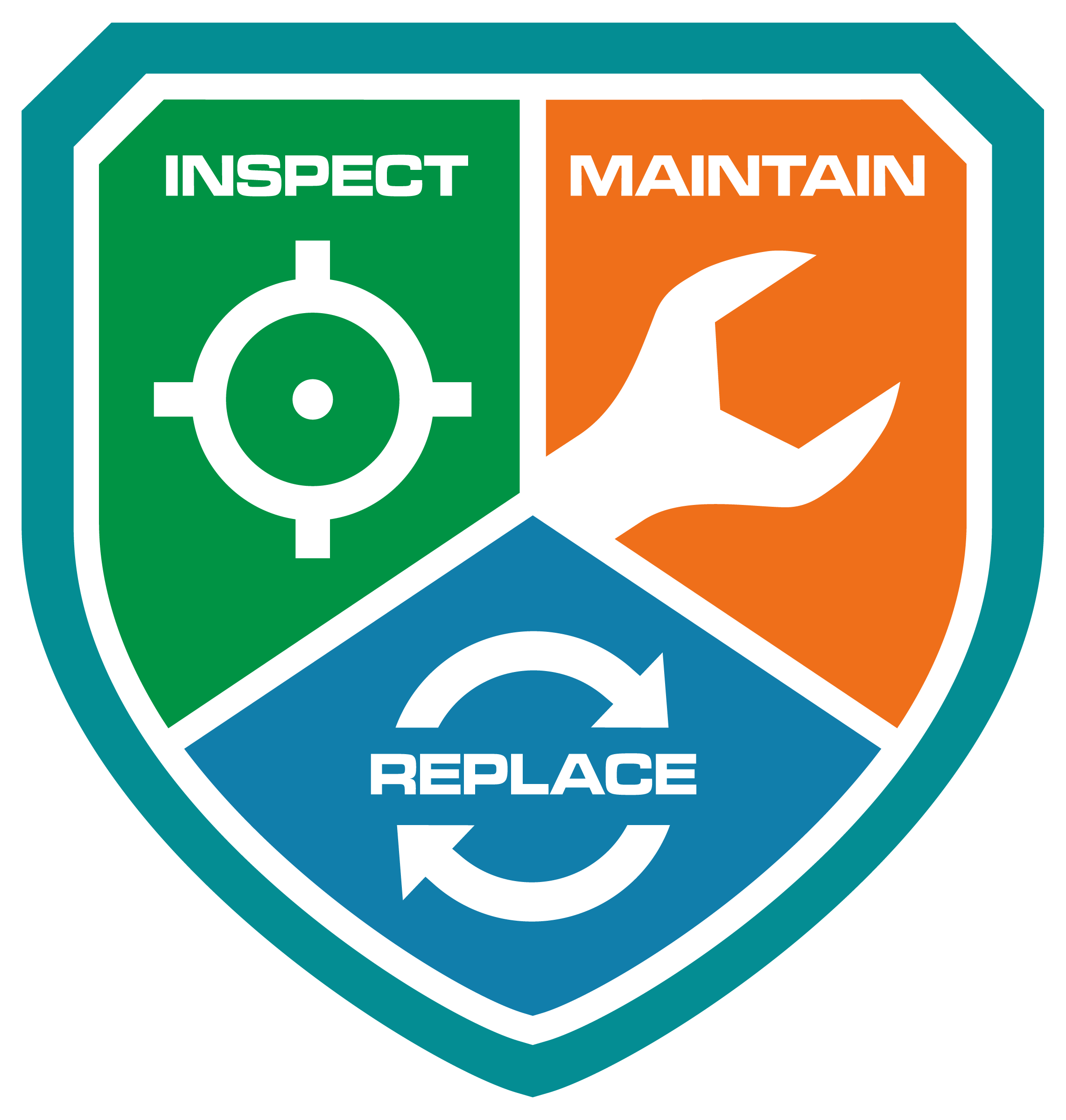
In the first episode of CIMCO's Beyond the System podcast, David Fauser and Josh Bell discuss how the Inspect, Maintain, Replace (IMR) framework puts cost, risk, and performance back under your control. Using real-life examples, they look at how much of the work your own staff can handle, when it pays to bring in a contractor, and why a proactive approach almost always costs less than waiting for the system to fail.
Failing at the Worst Possible Time
An emergency breakdown is the most expensive way to fix a piece of equipment. The repair itself is only part of the bill. Rushed parts, overtime labor, and lost operating days pile on top and rarely fit within the planned budget.
A few years ago, a shell-and-tube chiller at an ice rink failed right in the middle of the Christmas holidays, with major tournaments scheduled. David Fauser, Director of Sales at CIMCO, remembers the job well. The facility was down for about three weeks during what is typically the busiest stretch of the season.
CIMCO's mechanics worked around the clock, parts were flown in, and the service department made repeated site visits while both sides coordinated across multiple levels of staff. The team re-tubed the chiller in record time, and the town was so appreciative that the mayor threw a party for the crew.
The crisis was handled, but it left Fauser wondering about the big picture. Had a replacement plan been in place, the component might have been replaced two years earlier, at perhaps a third of the cost or less. And that is only the contractor's side of the ledger. The facility absorbed its own costs too: potential tournament cancellations, redirected staff, and the loss of the system on which its operation depends.
"About 20% of what we do is emergency response. We're there for our customers no matter what, but I'd say 100% of those emergency responses could have been prevented through a proper inspection, maintenance, and replacement plan."
David Fauser, Director of Sales, CIMCO
The costs are not always as visible as a breakdown. A neglected system usually works harder. When the condenser fouls with debris or scale, the equipment compensates by consuming extra energy to do the same job. And because mechanical parts wear against one another, the repair is only ever deferred, not avoided. "If it's not done properly, you either pay more in energy costs, or you pay more when the maintenance inevitably schedules itself," Fauser says.
These are two versions of the same problem where costs mount because the system is managed reactively, addressed only once it demands attention. The IMR framework takes the opposite approach, treating refrigeration as a complete lifecycle system you manage on your own schedule rather than the equipment's.

Step 1
Inspect: Learn What Good Looks Like
No two plans look alike. The right one depends on where your plant is located, how experienced your team is, and what your local authority having jurisdiction requires. If you are starting with little to go on, an authority, industry body, or a contractor can help you build the equipment list and the checklist that follows.
The good news is that inspection does not require a mechanic on site every day. Much of it can be handled by your own staff with the right direction.
For staffed facilities, Josh Bell, VP Ontario & Western Canada at CIMCO, recommends religiously working through the logbook checklist, with checks every two hours, if possible. For the many unstaffed facilities across North America, a contractor who makes regular visits can provide the same discipline with a higher level of technical expertise.
"I don't want to overcomplicate things for you. Come and look at the equipment. Have your checklist, but show up and look."
Josh Bell, VP Ontario & Western Canada, CIMCO
When Bell ran training for operators in a major Canadian city, his instruction was to stop treating the checklist as a box to tick and actually look at the equipment. The goal was for staff to learn the difference between what good looks like and what a problem looks like. An operator who hears squealing belts or spots water frozen to the roof does not need to fix the issue. They need to identify it and notify the person responsible, because small problems left alone become big ones. A broken condenser belt is a cheap repair. Frozen fan blades that destroy bearings, fans, wheels, and shafts are not.
A useful inspection plan also needs baselines. Bell advises recording equipment runtime along with suction, discharge, and oil pressures on every compressor, and knowing the correct operating parameters for secondary cooling fluids such as brine or glycol. Without a baseline, a reading is just a number. With one, it becomes a health check, and the logbook history helps a technician pinpoint when a problem began.

Step 2
Maintain: Find the Sweet Spot
Some facilities cut back on maintenance because they think they cannot afford it, when deferring it usually costs more over time. A consistent plan keeps the budget predictable rather than lurching between unplanned bills, though the number itself is not fixed. Bell suggests slightly increasing the budget as a plant ages, because routine tasks remain consistent in cost while major wear items eventually come due.
Operating patterns should also be taken into account. Equipment that starts and stops frequently, like a compressor in an ice rink, wears faster than the same machine running continuously in a cold storage plant.
"The worst service calls are when you get called out on Christmas Eve because a $50 chunk of rubber broke, and now it costs $600 to change it."
Josh Bell, VP Ontario & Western Canada, CIMCO
Some of the best maintenance decisions are small and preventive, like regularly replacing pump couplings.
There is also a danger in the other direction: overdoing the maintenance. Fauser sees service contract requests that schedule far more annual maintenance than the equipment requires, wasting money without improving reliability. The goal is a balance, reviewed once or twice a year around budget time.
This balance will differ from facility to facility, and for some, additional maintenance might actually be the right choice. Bell recalls a large municipal customer who agreed to quarterly visits and two oil changes per year, with one paired with an overhaul. The manager was skeptical at first, suspecting the schedule was just a way to book more visits. Years later, he told Bell the opposite had happened: his overall costs had dropped and breakdowns had stopped. Slightly over-maintaining on inexpensive oil changes reduced spending on expensive overhauls.
Step 3
Replace: Take Back Control
Every component has a life cycle, and industry guidelines, such as those from ASHRAE, provide an anchor point for how often each should be replaced, which you then weigh against the equipment's actual condition and service history.
Bell treats shell-and-tube chillers and condensers as non-negotiable, with replacement planning recommended around the 20- to 25-year mark. When one of these fails, the damage rarely stops at the unit. A failed chiller contaminates the secondary fluid and triggers disposal, emergency, lost-use, and rush charges, and a matching replacement is rarely in stock.
Fauser frames the wider exposure as three kinds of risk: the business risk if a component fails, including how fast it can be replaced; the operational risk to whatever the plant supports; and the safety risk. In nearly every facility CIMCO services, refrigeration is mission-critical.
That is why the timing of a replacement matters. An emergency leaves no room for improvement. You replace the failed part with the same thing because there is no time to consider anything else. Planning two or three years ahead changes that. It gives you room to reduce refrigerant charge, prepare for expansion, or improve efficiency while you are already spending on the replacement. Fauser points out that upsizing a condenser to reduce head pressure often adds only a small percentage to the cost of a project you are funding anyway. The same logic applies to compressors, where a larger piston at the same horsepower can add capacity while reducing wear and extending the machine's life.
Upgrades are not limited to sizing. Bell adds that modern controls belong in any replacement discussion, since they enable floating head-pressure control and continuous system trending that older equipment cannot. Grants frequently support these energy improvements, particularly for equipment past the 20-year mark, and a capable contractor should help you find them.
Starting Somewhere
Why does something as sensible as preventive maintenance get overlooked? Bell equates refrigeration to a car that still starts and drives. Facility managers face constant demands, and a system that runs gets pushed to the back of the mind until it announces a problem, which by then is an expensive one.
His closing advice is to start somewhere and put a plan together. Once the basics are in place, the benefits become clear, and most operators find they want to go further so the system stops being a daily worry. Done consistently, that discipline delivers fewer surprises, longer equipment life, and more confident decision-making.
The point is not to wait for an emergency to start planning maintenance. And as Fauser explains, it does not matter who does it. Whether the work is handled in-house, by CIMCO, or by another capable contractor, "what matters is that it gets done."
.png?sfvrsn=6aebd622_1)
Connect with CIMCO today to learn more.